
Figure 6. Corner view 1 of measurement location
This document reports the in-situ sound absorption coefficients for different walls in the congregation hall of the Ernst-Christoffel-Haus in Mönchengladbach-Rheydt. The measurements were performed in collaboration with Peutz Consult GmbH, Germany. The purpose of the measurements was to indicate how well the various surfaces absorb the sound in the room. The methods and measurement setup are presented in next section and the results are reported and compared in section 3. Finally, the conclusion is given in section 4 and some appendices are added in section 5.
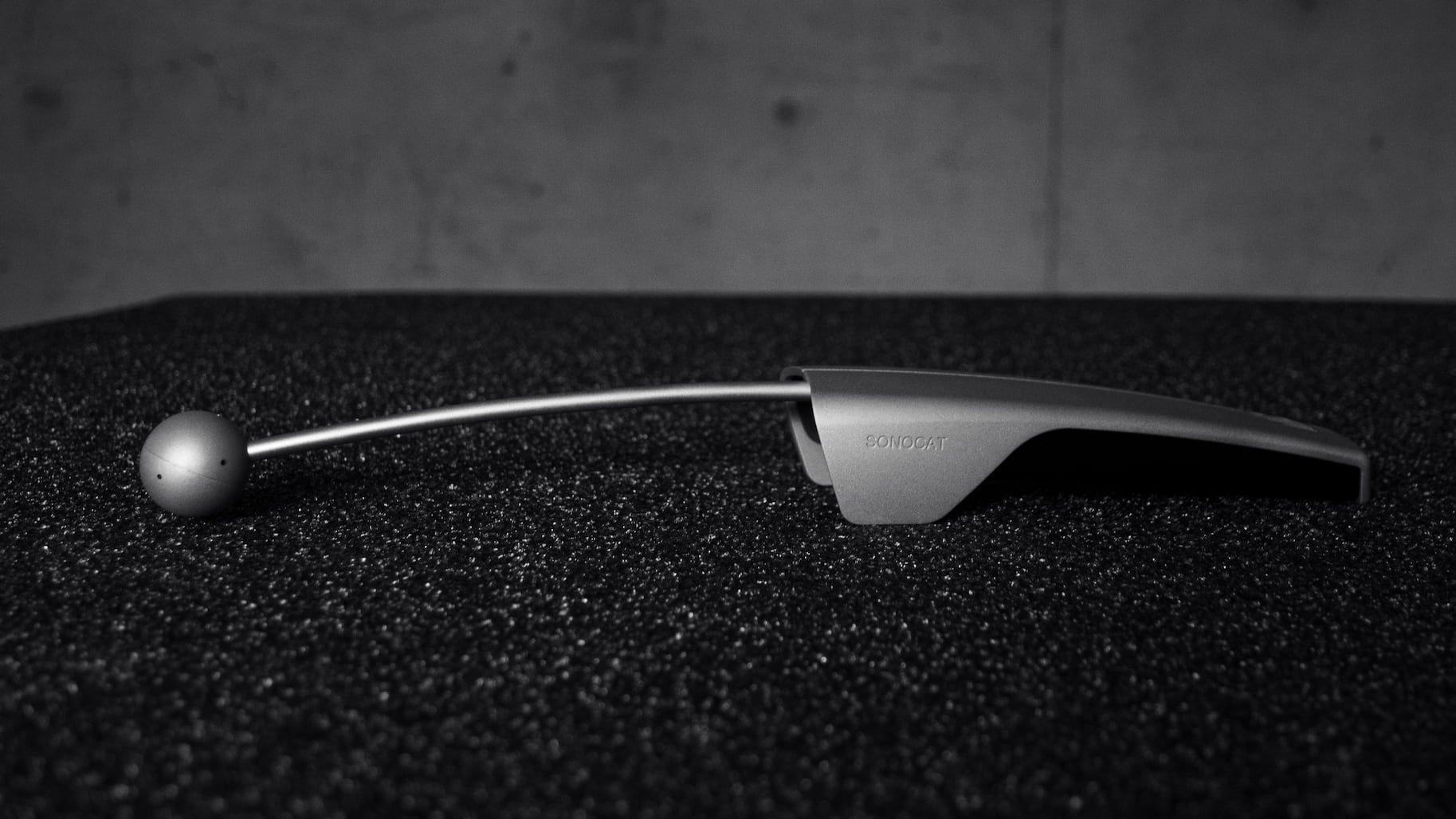
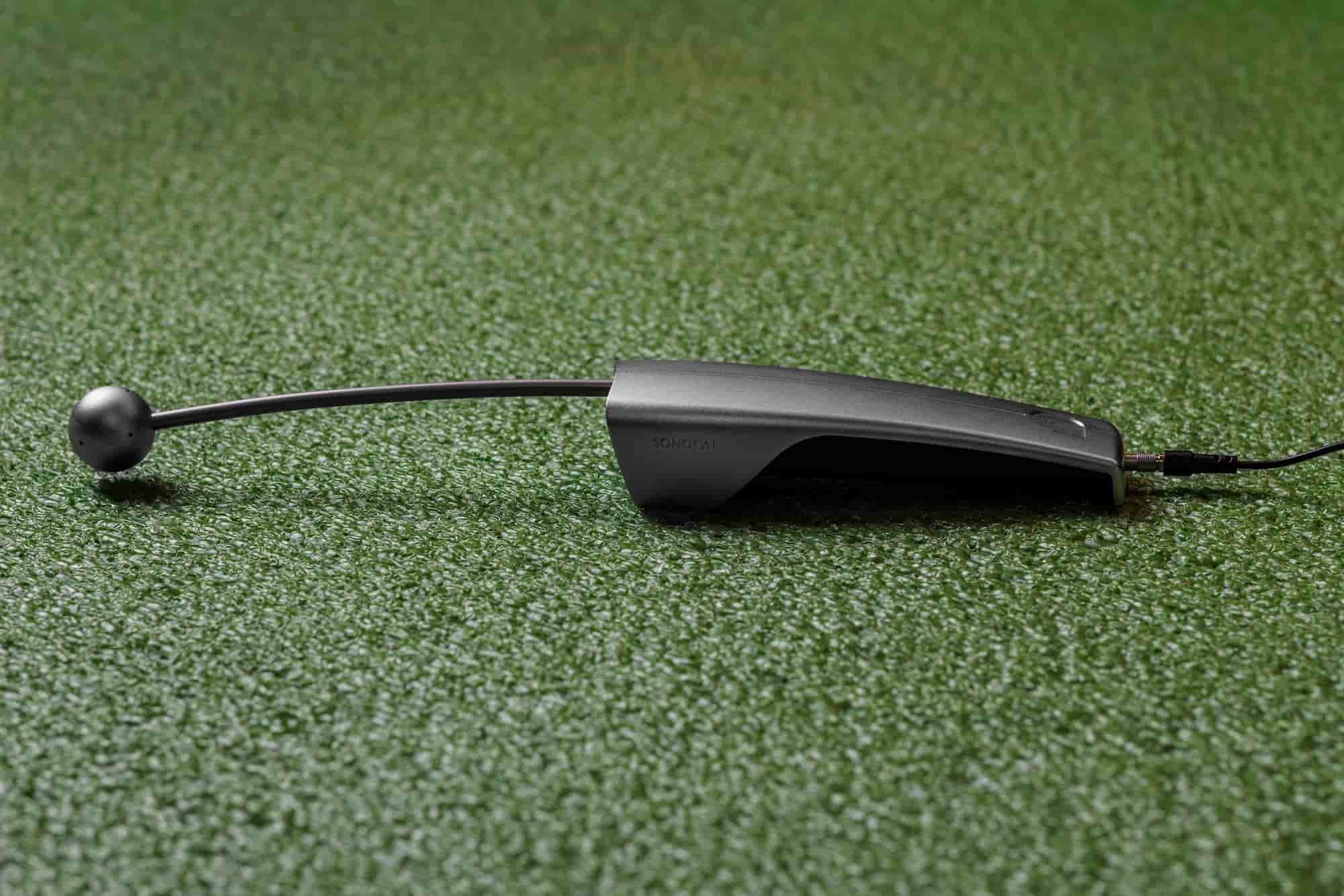
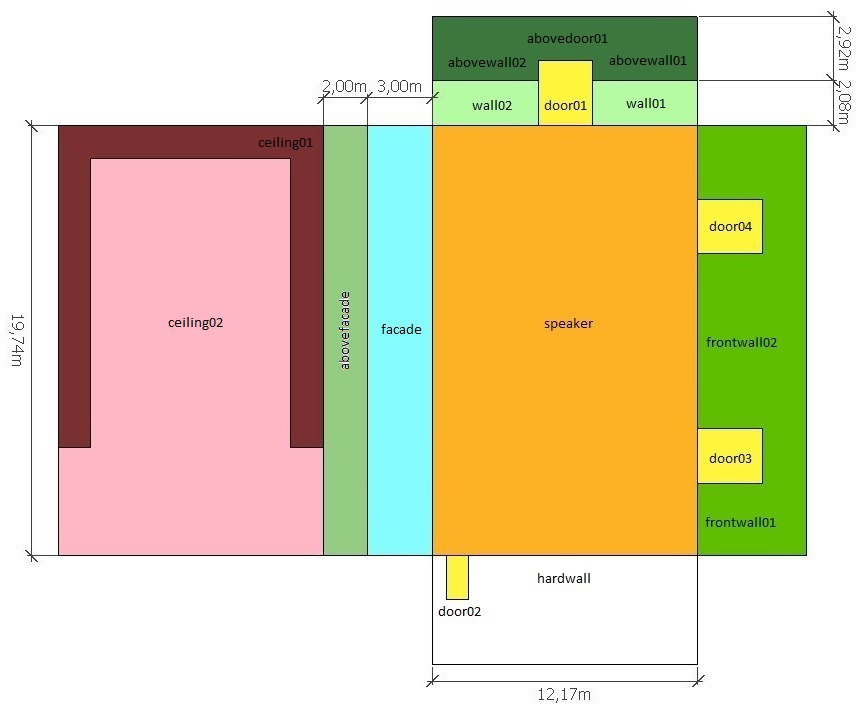
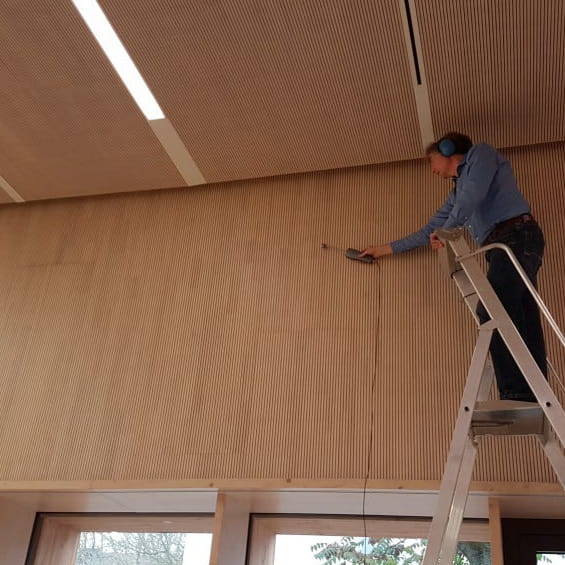
The in-situ sound absorption coefficients of different surfaces in the congregation hall of the Ernst-Christoffel-Haus in Mönchengladbach-Rheydt have been measured on 08.11.2017 using the Sonocat (Figure 1). For these measurements the local plane wave (LPW) assumption is used to estimate the incident and reflected sound intensity from which the sound absorption coefficient is determined. The floor plan and surface projection of the congregation hall is shown in Figure 2 and some corner view pictures have been added to the appendix. An omni-directional loudspeaker was positioned in the middle of the room emitting broadband noise. The walls, doors, facade and ceiling (as indicated in the floor plan) have been measured by performing small scan measurements, see Figure 3.
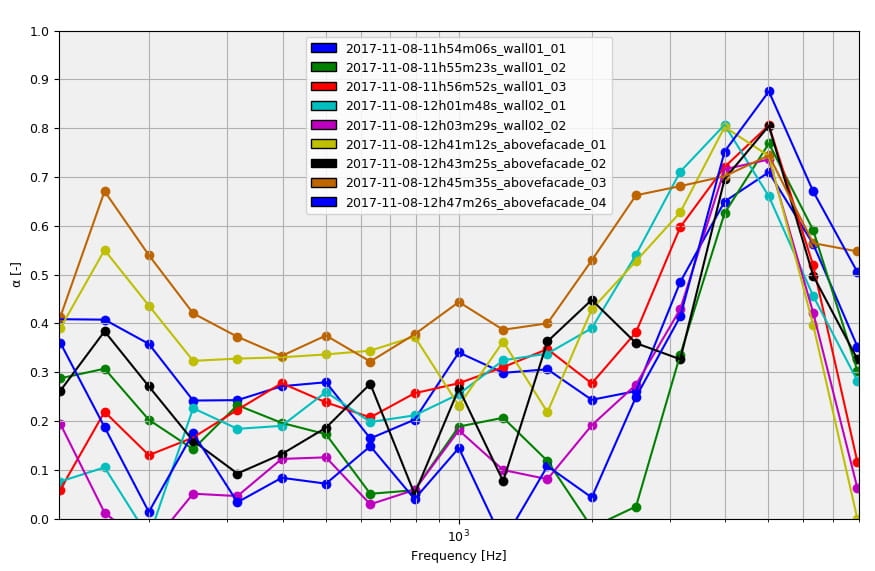
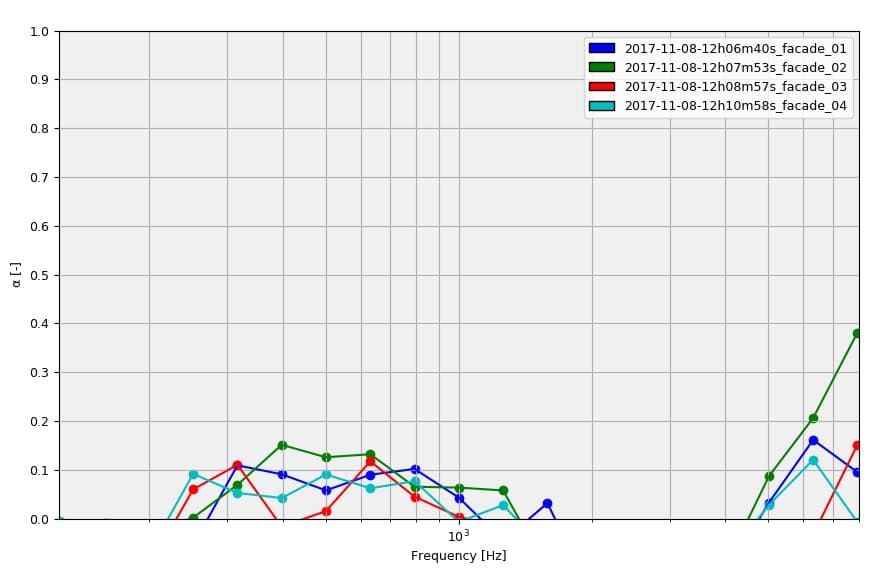
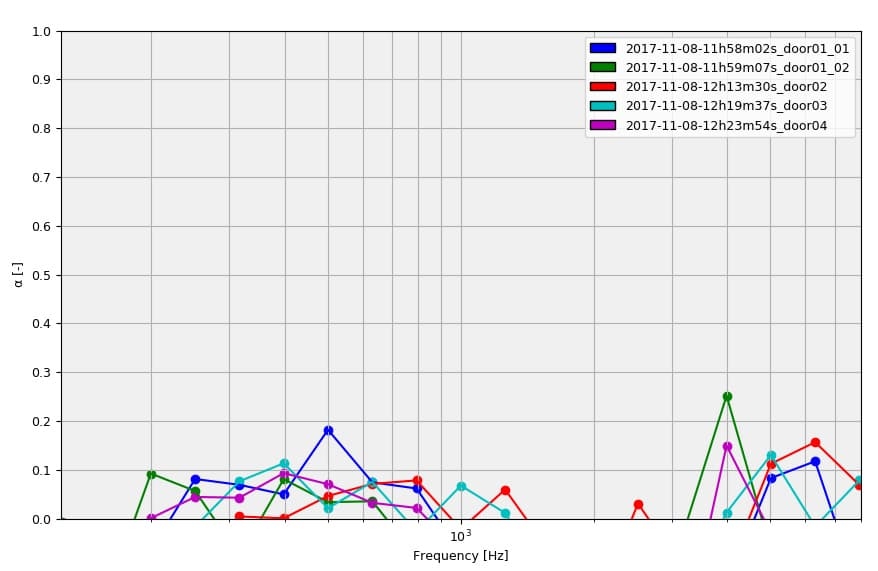
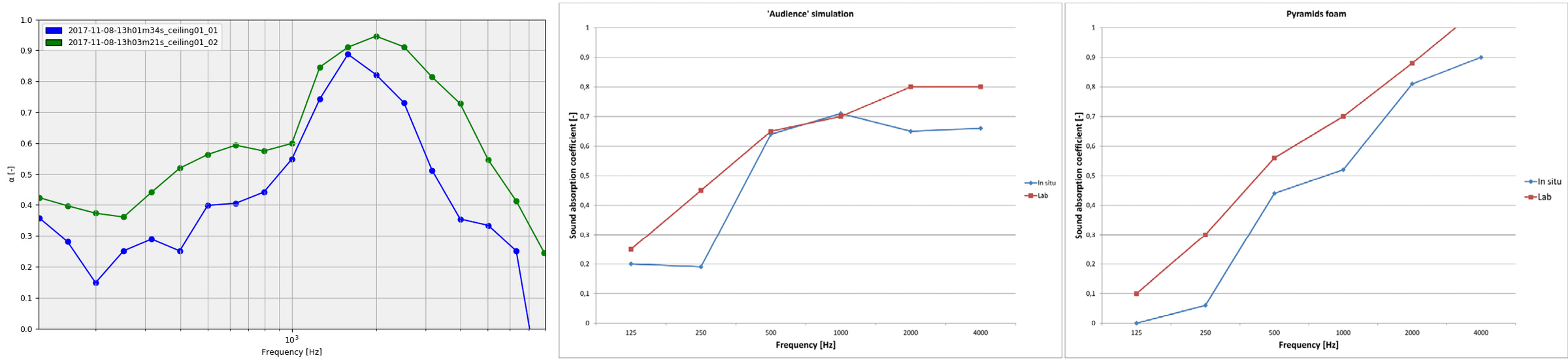
The measured in-situ sound absorption coefficients of the different surfaces are shown in Figure 4. The results are averages of multiple measurements. For example, the result for ‘abovewall01/abovedoor01/abovewall02’ (names are as referenced in Figure 2) is the (energetic) average absorption coefficient of multiple measurements for the ‘abovewall01’, ‘abovedoor01’ and ‘abovewall02’ surfaces. The individual results of this set are shown in Figure 5; for the other sets, the results are found in the Appendix. Some comparison measurements with reverberant room results are also added in the Appendix.
In Figure 4, it is shown that the surfaces abovewall01, abovedoor01 and abovewall02 and the surface ceiling01 have, overall, the highest absorption coefficient. The highest absorption values for these surfaces are achieved in the frequency range around 2 kHz, where the coefficient tops 0.9. The surfaces for wall01, wall02 and the abovefacade, absorb less sound. From 200 Hz the coefficient is around 0.2 for most frequencies and tops 0.75 at 5kHz. The results for ceiling02 look similar, but do absorb less sound for some frequencies.
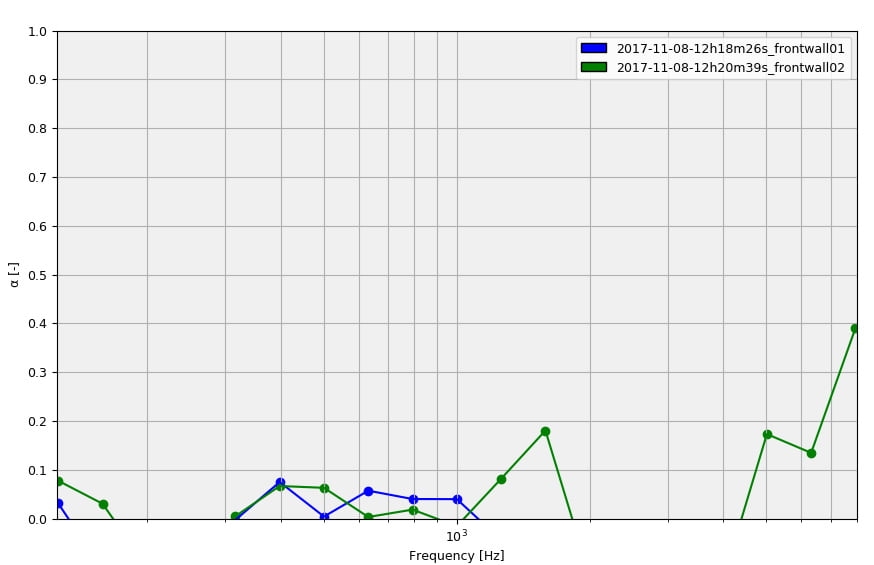
The other surfaces do not show absorptive properties at all and can be referred to as acoustically hard surfaces. The Sonocat measurements are in line with a visual inspection of the absorbing surfaces. The high absorbing values have been measured for the surfaces having a larger number of absorber strips behind the material. The surfaces with only a few strips behind the material indeed show lower absorption values. Negligible absorption values have been measured for the concrete and facade surfaces, as to be expected.
To show the variation in absorption values, the non-averaged measurement results for abovewall01, abovedoor01 and abovewall02 are presented in figure 5. It is shown that all measurements show comparable results although there is some variation. This variation can be explained by the fact that the sound field is different in front of each surface, as the Sonocat measures the in situ sound absorption coefficient, which may be different from one point to another. One should note that the Sonocat results become less accurate at frequencies below 300 Hz due to the close spacing between the microphones.
It has been shown clearly that some surfaces in the congregation hall absorb more sound than other surfaces. The surfaces abovewall01, abovedoor01 and abovewall02 and the surface ceiling01 absorb most sound in the room. The surfaces of wall01, wall02, abovefacade, and ceiling02 absorb less sound, while the remaining surfaces absorb no sound at all. The Sonocat can confirm that different acoustic materials have been used in the congregatuib hall, where the highest absorbing materials have been used at the locations: ‘abovewall01’, ‘abovedoor01’, ‘abovewall02’ and ‘ceiling01’. Less absorbing materials have been used at locations: ‘wall01’, ‘wall02’ and abovefacade. For the remaining surfaces, we can confirm that these are non-absorbing.
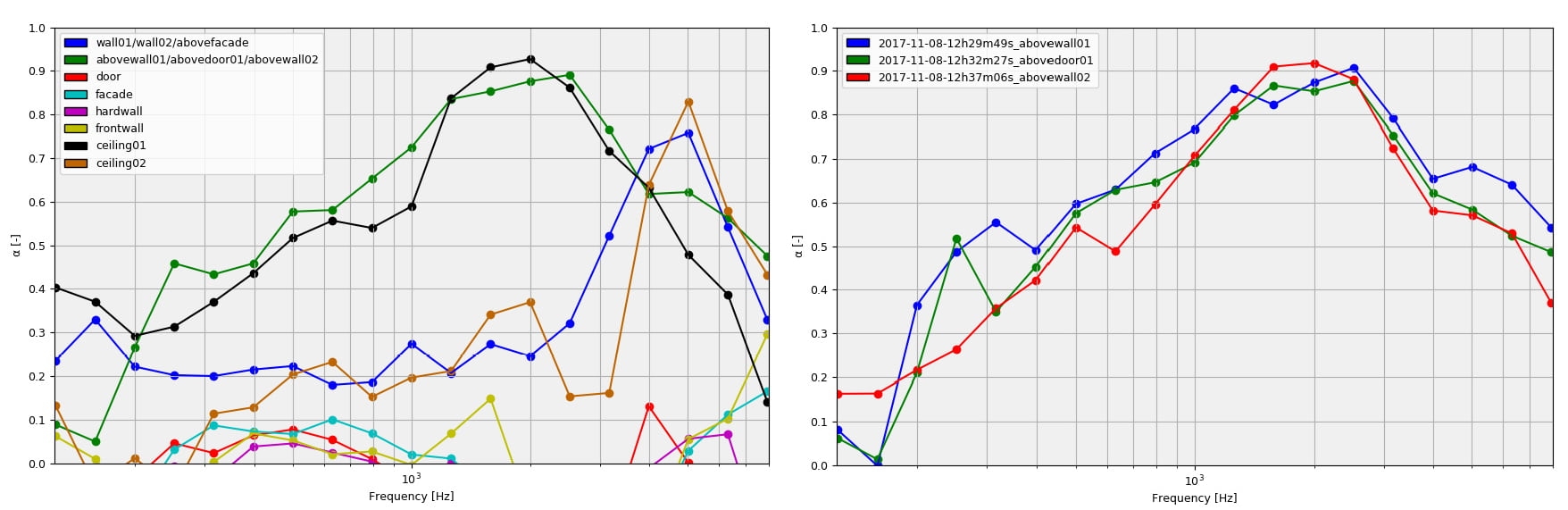
Figure 6. Corner view 1 of measurement location

Figure 7. Corner view 2 of measurement location

Figure 8. Corner view 3of measurement location

Figure 9. Corner view 4 of measurement location
“The Sonocat makes in‑situ absorption measurement effortless. Capturing the true sound properties of any surface directly on location. With its spherical microphone array and intuitive scanning method, it delivers fast, reliable insights that help you understand and optimize room acoustics with confidence.”
